Cosmic Princess Costume, Generated From Your Photo
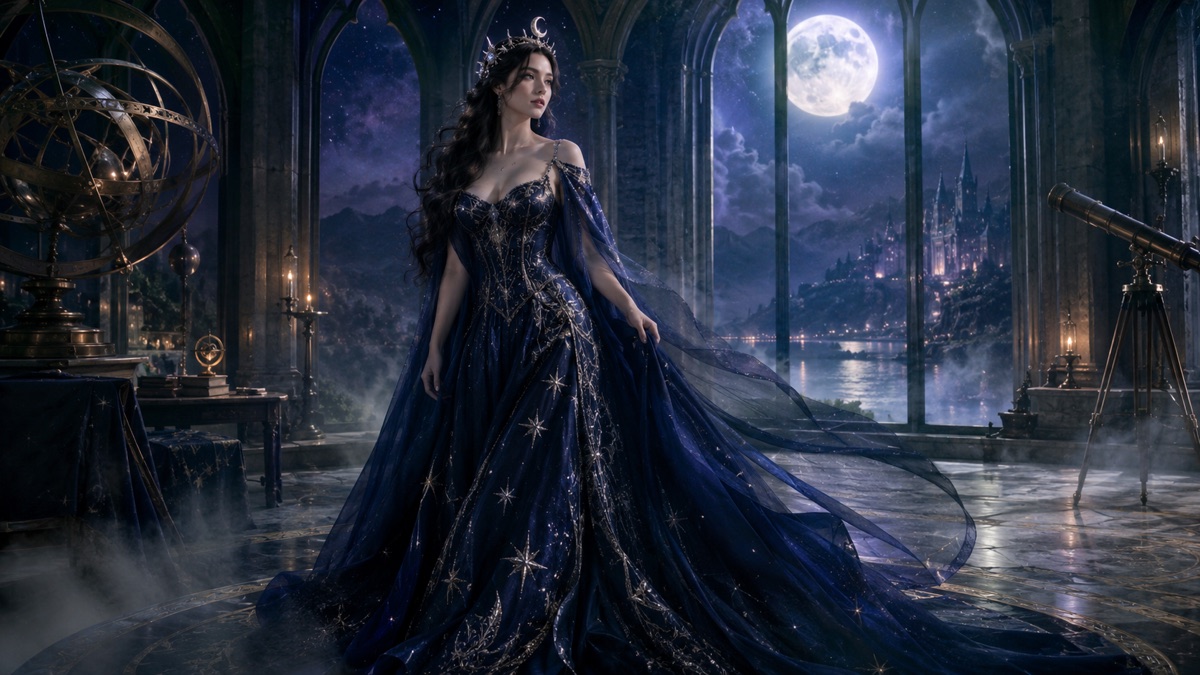
A midnight-blue gown, silver star embroidery and a moon crown. The look is built on fabric and light, so the prompt has to describe both.
Quick answer
- The look needs three things: a deep blue gown, silver star embroidery and a moon crown.
- Put the subject in a real place with tall windows or a night sky; a flat gradient background kills the fantasy.
- Describe fabric behavior, not just color: flowing, heavy, embroidered, softly glowing.
- Animate the fabric and the stars, not the whole body.
What makes the look read as cosmic
A princess costume becomes cosmic when the gown looks like it contains a sky. That means a deep base color, a second layer of light and a silhouette that moves. A blue dress with a printed star pattern reads as a costume shop; a midnight gown with embroidered light reads as a fantasy portrait.
- Base: midnight blue, not royal blue. The darker base lets the silver and violet read as light.
- Second layer: silver embroidery, small crystals or a soft internal glow along the hem.
- Silhouette: a fitted bodice and a full skirt, or a flowing column with a train. Pick one.
- Crown: a delicate silver moon crown, not a heavy tiara.
- Setting: a moonlit observatory, a stone balcony above clouds or a starry conservatory.
The exact cosmic princess prompt
The prompt keeps the face and pose from the reference photo, then rebuilds the outfit and the room. It names the fabric, the embroidery, the crown and the light because those are the details that separate the look from a generic blue dress.
Edit the uploaded photo into an original celestial Halloween princess portrait. Preserve the subject’s recognizable face, natural skin texture, body proportions and pose. Replace the outfit with a midnight-blue fantasy gown featuring silver embroidery, softly glowing star patterns and realistic flowing fabric. Add a delicate silver moon crown and luminous accessories. Place the subject inside a moonlit observatory with a starry sky visible through tall windows. Use elegant fantasy fashion photography, realistic fabric details, cinematic rim lighting, and a deep-blue, silver and violet color palette. Keep the person recognizable. Avoid altered facial identity, extra people, distorted anatomy, text or watermarks.
Image-to-video prompt
The gown fabric ripples gently, star embroidery pulses with a soft light, and the camera performs a slow orbit while the subject holds a calm pose. Fog drifts across the observatory floor.
Photo and pose tips
Pose. A three-quarter stance gives the gown space. A tight face crop cannot show a skirt, a train or a crown.
Arms. Keep the hands low and relaxed. If the hands are near the face, the model has two hard problems at once: fingers and jewelry.
Hair. A smooth updo or loose waves both work. Avoid a large hat or a busy accessory that competes with the crown.
Light. A soft key from the front and a cool rim from behind is ideal. If the original photo has a strong warm cast, the relight pass will have more work to do.
Fabric and light checklist
Test the base color first. Generate one still with the gown and no crown. If the blue reads black, raise the fabric midtone or add a cool fill from camera left. If it reads royal blue, lower the saturation before adding stars. The midnight base is what lets the silver read as light.
Add light in layers. Embroidery should catch a small specular highlight, not glow like a lamp. Ask for "silver thread catching the moon, subtle internal glow near the hem" and avoid the word neon. A soft glow along the hem is enough; a glowing bodice looks like a costume shop LED.
Keep one warm source. A single lantern, candle or window keeps the scene from turning into a blue monochrome. The warm accent is what makes the silver and the skin tone visible. Put it to one side so the gown gets a rim and a shadow.
Check the hem and hands. A full skirt hides the feet, which is useful, but the model may invent a second hem line or extra fingers where a hand holds the fabric. Crop at the waist if the hands are unreliable, or ask for empty hands.
Match the background to the story. An observatory needs a dome or a tall window; a balcony needs a rail and clouds. A flat starfield behind a gown reads as a stock photo. One architectural element gives the portrait a place.
Animating the gown
Fabric is the best motion for this look. Ask for a gentle ripple through the skirt, a soft pulse in the star embroidery and a slow camera orbit. Keep the face and crown stable.
Do not ask for a spin. A full turn redraws the entire gown and the face at the same time, and five seconds is not enough to recover. A half-step with a fabric ripple reads better.
Generate the cosmic princess look
The studio opens with the Cosmic Princess preset. Start with a text generation if you want to test the look, then switch to photo edit when the composition feels right.
Halloween AI studio
Frequently asked questions
What is a cosmic princess costume?
A fantasy Halloween look built around a midnight-blue gown, silver star embroidery and a moon crown, usually set in a moonlit observatory or a starry interior.
Can I generate it from a selfie?
Yes. Use a head-and-shoulders or three-quarter photo and keep the preservation clause at the top of the prompt.
Why does the gown look flat?
The prompt described a color but not a fabric. Add "flowing fabric, silver embroidery, soft internal glow" and a second light source.
How do I keep the crown from floating?
Ask for a delicate crown resting on the hair, and keep the head angle simple. A tilted head makes the crown harder to place.
Can I animate it?
Yes. Animate the fabric ripple and the star glow, not a full-body spin.